Amara: A Display Typeface for Bold, Artistic Statements
Some typefaces whisper, others simply state their business. Then there are those rare few that walk into the room and command the spotlight, radiating a distinct personality that’s impossible to ignore. This is the essence of this stunning decorative display font, a design asset crafted for moments that demand more than just legibility—they demand presence. It’s the kind of typographic choice that signals a shift from the ordinary to the deliberate, transforming a simple headline into a visual event and a basic logo into a brand landmark.
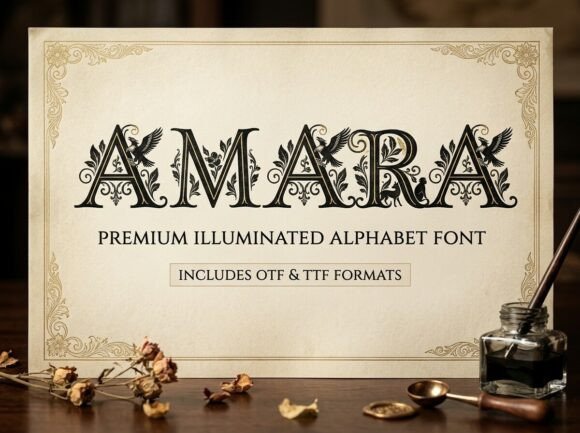
At its core, this is a tool for creators who think in terms of impact. Every letterform is treated as a piece of art, with unique artistic flourishes and a strong, confident stroke that gives it an unmistakable identity. This isn’t a workhorse font for body text; it’s a specialist, engineered for high-stakes visual communication. Its all-caps structure ensures a uniform, powerful rhythm, making it ideal for scenarios where you need every character to contribute to a cohesive and striking aesthetic. Whether you’re crafting a brand identity, designing product packaging, or building a social media campaign, this font provides a foundation of bold creativity.
Where Artistic Typography Meets Practical Application
The true test of a creative font is how it performs across different mediums. Its versatility is its strength, bridging the gap between artistic expression and commercial utility. For logo design, it excels at creating monograms and wordmarks that feel both luxurious and contemporary. Imagine it etched onto a boutique coffee bag, embossed on a leather journal, or screen-printed on a minimalist tote bag—the character of the font instantly elevates the perceived value of the product.
In the realm of editorial design and packaging design, it becomes a focal point. Use it for chapter titles in a cookbook, the masthead of a lifestyle magazine, or the primary text on a box of artisanal chocolates. Its decorative nature captures attention, while its polished finish ensures it remains professional. For digital creators, it’s a powerhouse for social media graphics. A bold Instagram quote, a YouTube thumbnail, or a Facebook event cover gains instant visual authority, helping content stand out in a crowded feed. It’s equally effective for website hero sections and blog post titles, where first impressions are critical.
Crafting a Cohesive Visual Identity
Choosing a typeface is a foundational branding decision. A font like this one doesn’t just spell out your business name; it communicates your brand’s ethos. Is your brand bold, unconventional, artistic, or premium? This font answers that question visually before a single word of copy is read. Using it consistently across your marketing assets—from business cards and letterheads to email headers and digital ads—builds a powerful layer of brand recognition. Customers begin to associate the distinctive letterforms with your business, creating a memorable and professional image.
The key is strategic application. Because it is an all-caps display typeface, its power is maximized in short, high-impact bursts. Think headlines, logos, and key taglines. Pairing it with a clean, neutral sans serif font for body text or supporting information creates a balanced and readable hierarchy. This contrast allows the artistic font to shine without overwhelming the viewer, ensuring your message is both seen and understood. This approach is fundamental to good web design and print materials, where clarity and aesthetics must work in tandem.
A Practical Guide for Designers and Creators
Before integrating any new design asset into your workflow, a thoughtful evaluation is necessary. Here’s how to approach this font practically:
- Understand Its Nature: Remember, this is an uppercase-only display font. It is not designed for long paragraphs or small, detailed text. Its role is to be the centerpiece. Use it where you want maximum visual interest.
- Test Your Pairings: Spend time pairing it with different fonts. Try it with a geometric serif font for a classic yet modern look, or with a simple sans serif for a clean, contemporary feel. The goal is to create a dialogue between the headline and the body copy.
- Consider the Context: Where will the final design live? A font that looks magnificent on a poster might need careful consideration on a mobile screen. Always test at the intended size and medium to ensure the decorative details remain clear and effective.
- Review the Included Files: The package includes both OTF and TTF files. The OTF is typically preferred by professional designers using advanced software like Adobe Creative Suite for its enhanced features. The TTF ensures universal compatibility, which is great for sharing files or using with a wider range of applications.
- Licensing for Commercial Use: If you’re a small business owner, entrepreneur, or freelancer, understanding the license is crucial. Ensure the font’s license covers your intended use, whether it’s for a client’s logo, merchandise for sale, or digital products. This protects both you and the font designer.
Ultimately, the right typographic choice is one that serves the project’s goals. This particular font is a tool for creating moments of visual distinction. It’s for the designer crafting a luxury brand identity, the entrepreneur packaging a new product line, or the content creator building a signature style. It offers a way to break from the generic and infuse projects with a strong, artistic personality, ensuring your work doesn’t just communicate—it captivates.