Akimila Plawud: The Bold Hand-Drawn Font for High-Impact Design
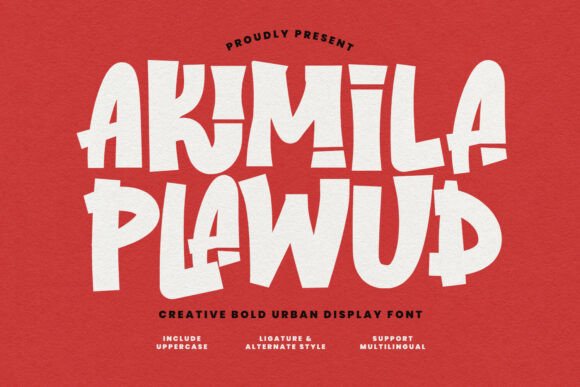
There’s a certain energy that jumps off the page when a font doesn’t look like it was spit out by a machine. You know the feeling—strokes that feel human, shapes that aren’t perfectly symmetrical, and a personality that makes you stop scrolling. That’s exactly the space where Akimila Plawud lives. This isn’t your typical clean, corporate typeface. It’s a heavy, hand-drawn display font built from irregular geometric shapes that give it a raw, confident presence. If you’ve been searching for something that feels bold without being aggressive, playful without being childish, and distinctive without being illegible, this creative font deserves a closer look.
A Typeface That Commands Attention Without Screaming
What makes Akimila Plawud visually interesting is its combination of weight and imperfection. The thick strokes give each letterform serious visual gravity, but the hand-drawn quality keeps things from feeling sterile. There’s a deliberate irregularity in the geometry—letters that lean slightly, curves that aren’t mathematically precise—that creates warmth and character. This is the kind of modern typography that works beautifully when you need a headline to land hard, a poster to stop someone mid-stride, or a product label to stand out on a crowded shelf.
The font includes unique ligatures and alternate character styles, which is a detail that separates a premium font from a free download. Those extras give you flexibility. Maybe you want the standard version for a clean headline, but the alternates for a logo where you need a specific letter to feel more distinctive. Having those options built into the typeface itself means less time hacking letters together in Illustrator and more time refining your actual design.
Where This Display Font Actually Works in Real Projects
Let’s talk practical applications, because a font is only as good as the problems it solves. Akimila Plawud is a display font by nature, which means it shines in situations where you need large-scale text to carry visual weight. Think about the projects where typography isn’t just functional—it’s the design itself.
Branding and Logo Design — If you’re building a brand identity for something that needs to feel energetic, creative, or handcrafted, this typeface gives you a strong starting point. A coffee roaster, a streetwear label, a craft brewery, an indie music festival—these are brands where a bold, hand-drawn aesthetic reinforces the story. Pair it with a simple sans serif font for body text, and you’ve got a typographic system that feels cohesive without being boring.
Packaging Design — Shelf presence matters. When someone’s scanning a row of products, the ones with strong visual hierarchy win. Akimila Plawud works well for product names and taglines on packaging because its heavy weight reads clearly even at a distance, and the hand-drawn quality suggests authenticity—something consumers increasingly value.
Posters and Print Materials — Event posters, gig flyers, promotional banners, magazine covers. These are environments where a creative font can do the heavy lifting. The irregular geometry of Akimila Plawud gives posters a sense of movement and energy that a geometric sans serif simply can’t replicate.
Merchandise — T-shirts, tote bags, stickers, hats. Bold typographic compositions are everywhere in merchandise design, and this font’s high-impact presence translates well to physical products. The thick strokes hold up on fabric printing, and the personality of the letterforms means you don’t need much else to create a compelling design.
Social Media Graphics — Instagram posts, YouTube thumbnails, Pinterest pins, story templates. The scroll never stops, so your typography needs to do the work fast. A display font like this grabs attention in crowded feeds, especially when used at large sizes with contrasting colors. It’s particularly effective for quotes, announcements, and promotional graphics where the text itself is the focal point.
Websites and Blogs — Used sparingly and at large sizes, a bold typeface like Akimila Plawud can anchor a website’s visual identity. Hero sections, section headers, and call-to-action blocks benefit from a font that feels distinctive. Just remember: display fonts are meant for display. Don’t set your blog paragraphs in it.
Invitations and Editorial Layouts — Wedding invitations with a modern edge, editorial spreads for creative magazines, event programs, menu designs. When you need typography that feels curated and intentional, a hand-drawn display font adds a layer of personality that stock fonts can’t match.
Digital Products and Marketing Assets — E-book covers, online course thumbnails, email headers, ad creatives, lead magnets. If you sell digital products or run marketing campaigns, consistent use of a distinctive font across your assets builds recognition. People start to associate that visual style with your brand before they even read the words.
How the Right Font Improves More Than Just Looks
Typography decisions ripple through everything. When you choose a typeface that aligns with your brand’s personality, you’re not just making things look better—you’re building consistency, recognition, and trust. Here’s how a font like Akimila Plawud contributes to that.
Visual Consistency — Using the same display font across your social media graphics, website headers, packaging, and print materials creates a unified visual language. People recognize your content before they see your logo. That consistency signals professionalism and intentionality.
Brand Recognition — Distinctive typography is a branding tool. Think about how many brands you recognize purely by their typeface choices. A creative font with a strong personality—like the hand-drawn, geometric weight of Akimila Plawud—becomes part of your brand’s visual DNA.
Audience Engagement — People respond to design that feels alive. A font with character and warmth creates an emotional connection that a default system font never will. When your typography feels intentional, your audience trusts that the rest of your offering is equally considered.
Professional Presentation — There’s a visible difference between a project that uses thoughtfully chosen typography and one that relies on whatever was available. That difference communicates quality, care, and credibility—whether you’re designing a client pitch deck, a product label, or a social media campaign.
Practical Tips for Working With a Bold Display Typeface
Choosing a font is one thing. Using it well is another. Here are some grounded recommendations for getting the most out of a heavy, hand-drawn display font like this one.
Review All Included Styles — Before you start designing, explore every alternate, ligature, and style the font offers. You might discover a letter variant that perfectly fits a logo or a ligature that solves a spacing problem in a headline. Premium fonts include these extras for a reason—use them.
Test Font Pairings Early — A bold display font rarely works alone. You need a secondary typeface for body text, captions, and supporting information. Pair Akimila Plawud with a clean sans serif font for contrast, or a simple serif font if your brand skews more traditional. Test combinations early in your process so you don’t have to rework everything later.
Prioritize Readability — Display fonts are designed for impact at large sizes. That doesn’t mean you should ignore readability. Test your chosen text at the actual size it will appear—in a social media thumbnail, on a physical product, on a mobile screen. If people can’t read it quickly, the design isn’t working, no matter how good it looks.
Match Typography to Project Goals — Not every project needs a bold, hand-drawn typeface. A law firm’s website probably isn’t the right context. But a music festival, a food truck brand, a children’s book cover, a fitness studio—these are projects where the energy and personality of Akimila Plawud adds genuine value. Context matters.
Understand Licensing — If you’re using a font for commercial work—client projects, products for sale, business branding—make sure you have the right license. Most premium fonts offer different licensing tiers depending on usage. This isn’t the place to cut corners. Proper licensing protects you legally and supports the designers who create the tools you rely on.
Why Font Choice Still Matters More Than You Think
In a landscape saturated with templates and stock design assets, typography remains one of the most powerful ways to differentiate your work. A font like Akimila Plawud isn’t just a collection of letterforms—it’s a design decision that shapes how people perceive your brand, your message, and your professionalism. Whether you’re a designer building a client’s identity system, a small business owner creating your own packaging, or a content creator developing a visual brand for your platform, the typefaces you choose are doing real work. They’re setting tone, establishing hierarchy, and communicating personality before a single word is read.
The hand-drawn, geometric weight of this particular typeface fills a specific niche: it’s bold enough to dominate a layout, playful enough to feel approachable, and versatile enough to work across print, digital, and physical applications. That combination is harder to find than you might expect. If your projects call for typography that feels alive, intentional, and impossible to ignore, Akimila Plawud is worth exploring as part of your design toolkit.