Freya: Where Gothic Structure Meets Enchanted Elegance
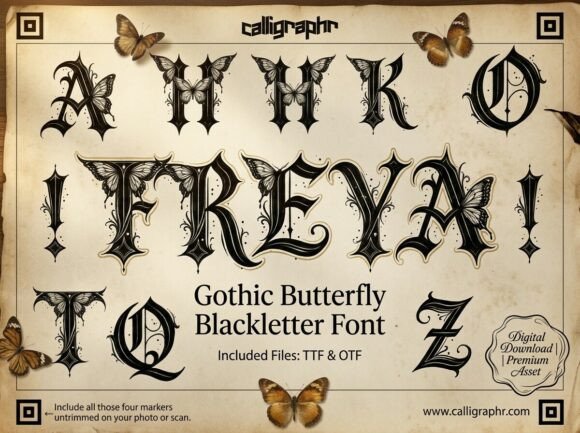
Imagine a font that carries the weight of medieval manuscripts yet flutters with the delicate grace of a nocturnal moth. That’s the captivating contradiction at the heart of Freya, a premium display typeface that refuses to be categorized by a single era or aesthetic. It bridges the gap between the aggressive, angular strokes of traditional Blackletter and the intricate, organic beauty found in nature—specifically, the veining of butterfly wings and the twisting paths of forest vines. For designers and creatives looking to inject a sense of "dark-cottagecore" into their work, Freya offers a visual language that feels both ancient and magically alive.
Aesthetic Alchemy: The Visual DNA of Freya
At its core, Freya is a study in duality. On one hand, you have the structural integrity of Blackletter typography—a style historically associated with authority, edicts, and the gritty texture of old-world Europe. On the other hand, Freya softens these sharp edges with illustrative flair. The terminals of the letters don't just stop; they bloom into vine-like tendrils. The negative space within the glyphs often mimics the symmetry of a moth’s wings.
This isn't just a standard serif font or a heavy gothic script; it is an artistic asset. When you look closely at the letterforms, you notice the hand-drawn quality. It feels artisanal and bespoke, which is a massive asset for brands trying to avoid the sterile, corporate look of modern sans serif fonts. Freya allows you to establish a mood instantly. It whispers of apothecaries, hidden gardens, vintage bookshops, and the romantic side of the macabre. If your brand identity relies on atmosphere and storytelling, this typeface provides the visual narrative before the reader even processes the words.
Practical Applications: Beyond the Occult Bookshop
While Freya is a natural fit for occult book mastheads or atmospheric music album covers, its utility extends far beyond niche horror markets. In the current landscape of design, there is a hunger for authenticity and texture. We are seeing a resurgence of "cottage-core," "goblin-core," and vintage aesthetics across social media and branding. Freya slots perfectly into these trends, offering a high-end solution for a variety of creative projects.
Consider the versatility of this typeface across different mediums:
- Logo Design and Branding: For small businesses selling handmade goods, herbal teas, botanical perfumes, or artisanal crafts, Freya acts as a stamp of quality. It suggests that the product inside the packaging is made with care and tradition. It pairs exceptionally well with earthy color palettes—deep forest greens, burgundies, and antique golds.
- Packaging Design: A display font like Freya shines on labels. Because of its intricate details, it creates a tactile feel even on flat paper. It is particularly effective for limited edition releases or seasonal collections where you want the product to feel like a treasured object rather than a mass-produced item.
- Social Media and Web Headers: In a scroll-stopping environment, Freya commands attention. It works beautifully for "gothic-romance" social media headers or lifestyle blogs that focus on dark academia themes. However, because of its density, it is best used for headlines and hero text rather than body copy.
- Merchandise and Apparel: The illustrative nature of the font makes it ideal for screen printing on tote bags, hoodies, and posters. It functions almost like a piece of art itself, reducing the need for complex accompanying graphics.
- Event Stationery: For weddings or events with a specific theme—think a masquerade ball, a twilight garden party, or a Halloween gala—Freya sets the tone on invitations and menus. It promises guests an immersive experience from the moment they open the envelope.
Strategic Typography: Integrating Freya into Your Workflow
Adopting a font with such a strong personality requires a bit of strategic planning. As a designer or business owner, your goal is to use Freya to enhance readability and brand recognition, not to muddy your message. Here is how to approach using this premium font effectively in your projects.
Mastering Font Pairing
The golden rule of using a decorative display typeface is balance. Because Freya is dense, ornate, and high-contrast, it needs a partner that knows when to step back. You would never set a full paragraph of body text in Freya; it would be exhausting to read.
Instead, look for a clean, neutral companion. A geometric sans serif font pairs wonderfully here, offering a modern counterpoint to Freya’s historical roots. Alternatively, a simple, legible serif font with minimal contrast can maintain the traditional feel while ensuring the reader isn't strained. Think of Freya as the lead singer and your secondary font as the rhythm section—it keeps the beat steady while Freya handles the theatrics.
Readability and Sizing
Freya is a display font, meaning it is designed to be seen at larger sizes. When you shrink it down, the intricate details that make it beautiful—the vine work and the wing structures—can turn into visual noise or "ink traps" that blur together.
Practical Tip: Always test your font at the actual size it will be viewed. If you are designing a mobile-first website, check how the header looks on a small phone screen. You may need to increase the letter-spacing (tracking) slightly to let the characters breathe, ensuring the text remains legible and professional.
Reviewing Included Styles
When working with a creative font like this, explore the full family. High-quality typefaces often come with alternates, ligatures, or stylistic sets. Freya’s design may include variations on specific letters that allow you to customize the flow of a word. For example, you might want a more elaborate swash on a logo mark but a cleaner version for a website headline. Understanding these options allows you to create visual consistency across different touchpoints without the font feeling repetitive.
The Commercial Edge: Licensing and Professional Presentation
One of the most overlooked aspects of typography is the legal framework surrounding it. If you are using Freya for a client project, a commercial product, or merchandise that you intend to sell, you must ensure you have the correct commercial license.
Free fonts found on the internet often come with vague licensing that can expose your business to legal risk down the line. Investing in a premium font like Freya is not just about aesthetics; it is about professionalism and security. A proper license ensures you have the legal right to use the typeface in your logo design, on your packaging, and across your digital products. It protects your brand identity and ensures that you won't have to rebrand six months down the line because of a copyright claim.
Furthermore, using premium design assets signals to your audience that you value quality. In a crowded market, the details matter. The sharpness of the vectors, the consistency of the kerning, and the uniqueness of the style all contribute to a brand that feels established and trustworthy.
Crafting a Narrative with Modern Typography
Ultimately, choosing a font is about choosing a voice. Freya speaks with a voice that is dramatic, rooted in history, yet undeniably artistic. It allows you to tap into the growing market of consumers who appreciate the "dark side of enchantment"—those who find beauty in the shadows and elegance in the wild.
Whether you are designing a cover for an atmospheric music album, branding an artisanal apothecary, or creating a cinematic header for a gothic-romance blog, Freya provides the tools to make your vision tangible. It reminds us that typography is more than just letters on a page; it is the visual embodiment of a story waiting to be told.
By pairing this typeface thoughtfully with complementary design elements and ensuring your layouts prioritize the user experience, you create work that doesn't just look good—it feels meaningful. Freya is more than a font; it is a gateway to a specific, enchanting aesthetic that resonates deeply with modern audiences looking for authenticity and atmosphere in their visual world.